Who Is USA Time? A Complete Guide to Understanding USA Time Zones, History, and Modern Usage
Meta Description: Discover everything about USA time, including its time zones, history, daylight saving system, and how time works across the United States in this detailed guide.
Introduction
When people refer to “USA time”, they are not talking about a person but rather a structured and highly organized system of timekeeping used across the United States. Due to its vast geographical size, the United States operates across multiple time zones, making USA time a fascinating and sometimes complex concept. From business operations to travel schedules, and from global communication to technological systems, time in the U.S. plays a crucial role in everyday life. Understanding how USA time works can help individuals coordinate internationally, manage schedules effectively, and gain deeper insight into how modern timekeeping systems evolved.
Quick Bio of USA Time
| Attribute | Details |
|---|---|
| Name | USA Time |
| Type | Time Zone System |
| Origin | Standardized in 1883 |
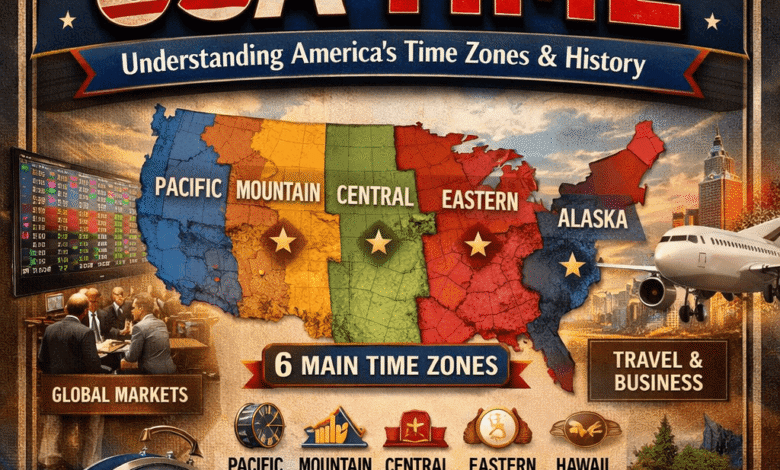
| Main Zones | Eastern, Central, Mountain, Pacific, Alaska, Hawaii-Aleutian |
| Governing Body | U.S. Department of Transportation |
| Key Feature | Multiple time zones |
| Special System | Daylight Saving Time (DST) |
| Global Importance | High (used in international coordination) |
What Is USA Time?
USA time refers to the standardized system used across the United States to measure and organize time. Because the country spans a large portion of the Earth’s surface, it cannot operate under a single time standard. Instead, it is divided into several time zones, each representing a different offset from Coordinated Universal Time (UTC). This division ensures that daylight hours align reasonably with human activity, allowing people in different regions to follow a practical daily schedule.
The concept of USA time is essential not only within the country but also globally, as the United States plays a major role in business, finance, technology, and international relations. Many global operations rely on synchronizing with U.S. time zones, especially the Eastern Time Zone, where major financial markets operate.
History and Development of USA Time
The history of USA time dates back to the 19th century when the rapid expansion of railroads created a need for standardized timekeeping. Before this, towns and cities followed their own local solar time, which caused confusion and scheduling conflicts.
In 1883, American and Canadian railroads introduced a standardized time system that divided the country into four primary time zones. This system was later officially adopted by the U.S. government. The introduction of standardized USA time revolutionized transportation, communication, and commerce.
Over time, additional time zones were added to accommodate regions such as Alaska and Hawaii. Today, the system has evolved into a highly precise and technologically integrated framework that supports everything from aviation to digital communications.
Major Time Zones in the United States
One of the defining features of USA time is its division into multiple time zones. Each zone reflects a specific offset from UTC and serves different regions of the country.
Eastern Time Zone (ET)
This is the most influential time zone in the United States, covering cities like New York and Washington, D.C. It is widely used in finance, media, and government operations.
Central Time Zone (CT)
Located one hour behind Eastern Time, this zone includes cities such as Chicago and Dallas. It is a major hub for agriculture and manufacturing industries.
Mountain Time Zone (MT)
This zone is less densely populated and includes states like Colorado and Utah. It operates one hour behind Central Time.
Pacific Time Zone (PT)
Covering states like California and Washington, this zone is known for its influence in technology and entertainment, particularly in Silicon Valley and Hollywood.
Alaska Time Zone
This zone serves the state of Alaska and is several hours behind Eastern Time due to its geographical position.
Hawaii-Aleutian Time Zone
This is the westernmost time zone in the United States and does not observe Daylight Saving Time.
Daylight Saving Time in USA Time
A unique feature of USA time is Daylight Saving Time (DST), a system designed to make better use of daylight during the longer days of summer. During DST, clocks are set forward by one hour in the spring and set back in the fall.
The purpose of DST is to extend evening daylight, which can reduce energy consumption and provide more daylight hours for outdoor activities. However, not all regions follow DST. For example, Hawaii and most of Arizona do not observe this system.
The implementation of DST adds another layer of complexity to USA time, especially for international coordination and scheduling.
Importance of USA Time in Daily Life
The role of USA time extends far beyond simply telling the hour. It is deeply embedded in various aspects of daily life, including business operations, travel, education, and communication.
In the business world, companies rely heavily on accurate timekeeping to coordinate meetings, manage supply chains, and operate across different regions. For travelers, understanding USA time is essential for catching flights, attending events, and adjusting to new schedules.
Moreover, digital platforms, financial markets, and global communications all depend on synchronized time systems. Without a structured USA time framework, modern society would face significant challenges in maintaining efficiency and coordination.
USA Time and Global Influence
The influence of USA time extends beyond national borders. Due to the United States’ economic and political significance, its time zones are often used as reference points in international contexts.
For instance, global stock markets closely monitor the opening and closing times of U.S. exchanges, particularly those operating on Eastern Time. Similarly, international businesses frequently schedule meetings based on U.S. time zones to align with American partners.
This global relevance makes USA time an important component of international timekeeping systems, highlighting its role in shaping worldwide activities.
Challenges and Confusion Around USA Time
Despite its structured nature, USA time can sometimes be confusing, especially for those unfamiliar with its multiple time zones and DST adjustments. Coordinating across different regions requires careful attention to time differences, which can lead to errors if not managed properly.
Technology has helped reduce confusion by automatically adjusting time settings on devices. However, human awareness and understanding remain essential for accurate scheduling and communication.
Modern Technology and USA Time
In the digital age, USA time is maintained with incredible precision using atomic clocks and advanced synchronization systems. These technologies ensure that timekeeping remains accurate across all regions and devices.
Smartphones, computers, and online platforms automatically adjust to the correct time zone, making it easier for users to navigate different schedules. This integration of technology has made USA time more accessible and reliable than ever before.
Conclusion
In summary, USA time is a comprehensive and highly organized system that reflects the geographical, economic, and technological complexity of the United States. From its origins in the 19th century to its modern-day implementation, it has evolved into a critical framework that supports daily life, business operations, and global interactions. Understanding USA time is essential for anyone who wants to navigate schedules effectively, communicate across regions, and engage with one of the world’s most influential nations. Its importance will continue to grow as globalization and technological advancements further connect the world.
FAQs About USA Time
1. What does USA time mean?
USA time refers to the system of multiple time zones used across the United States to standardize timekeeping.
2. How many time zones are there in USA time?
There are six main time zones: Eastern, Central, Mountain, Pacific, Alaska, and Hawaii-Aleutian.
3. What is the most important USA time zone?
The Eastern Time Zone is often considered the most important due to its role in finance, media, and government.
4. Does the entire USA follow Daylight Saving Time?
No, regions like Hawaii and most of Arizona do not observe Daylight Saving Time.
5. Why is USA time important globally?
USA time is important because many international businesses and financial markets rely on U.S. time zones for coordination.